











What is RTK Technology and Why It Matters for HOVERAir AQUA?
Ever searched for a drone that can automatically follow your kayaking trips? If you ask around, most people will tell you it's impossible without a skilled pilot on the beach because standard drones constantly lose you in the waves. The HOVERAir AQUA changes that entirely with RTK technology. Instead of relying purely on visual tracking that gets confused by ocean spray and glare, RTK creates a highly accurate electronic link between you and the drone. This centimeter-level precision keeps the camera firmly locked on your run, giving you professional, unmanned footage every single time.
What is RTK Technology?
RTK stands for Real-Time Kinematic positioning. It is an advanced location-tracking technology designed to pinpoint a device’s exact coordinates instantly. The system works by continuously processing live satellite data to lock onto a specific physical dot on the map, giving the device absolute spatial positioning in real time.
How an RTK System Works
To achieve this level of precision, the technology relies on two separate parts communicating constantly: a base station and a moving receiver, like a drone. The base station serves as a reference point. It constantly monitors incoming satellite signals for slight atmospheric distortions, calculates the exact correction needed, and instantly beams that updated data to the flying drone.
RTK vs. Standard GPS
Normal GPS can easily drift three to five meters, which makes tracking a fast-moving kayaker highly unpredictable. RTK shrinks that margin of error down to just a centimeter or two. This incredible level of precision eliminates sudden camera drifts, keeping the drone perfectly stable and ensuring the shot stays centered without any manual piloting.

How RTK Works in the HOVERAir AQUA
The HOVERAir AQUA applies this positioning technology through a straightforward two-part setup.
The Lighthouse and the AQUA
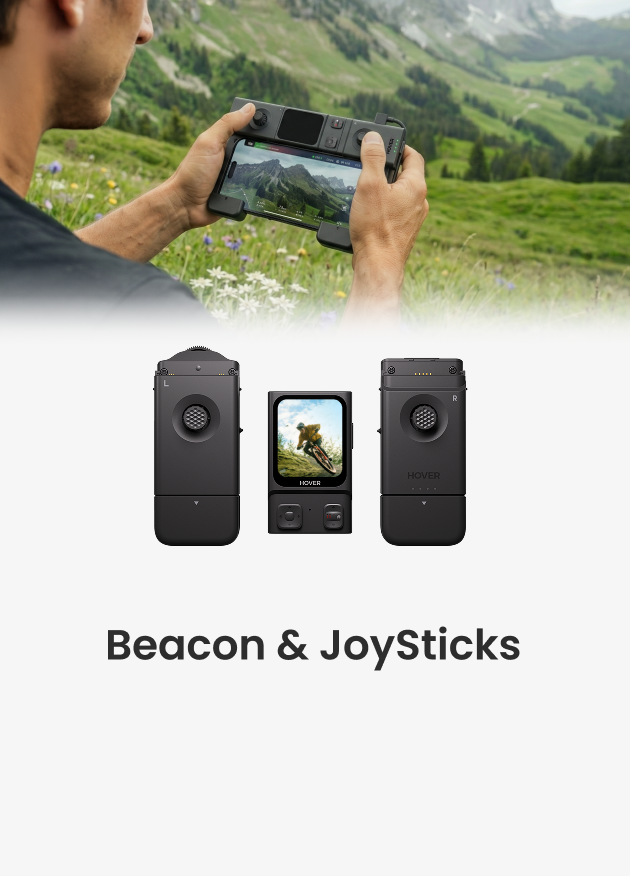
In this system, the Lighthouse acts as the base station. You strap it securely to your upper arm and ensure the device's top antenna stays pointed toward the sky, maintaining a clear, uninterrupted lock on satellite signals while you paddle. The AQUA itself functions as the moving receiver.
Dual Tracking Integration with ShadowTrack
The AQUA pairs its RTK system directly with ShadowTrack, its visual AI. They run simultaneously: RTK handles the absolute spatial positioning and flight path, while ShadowTrack fine-tunes the camera framing. By blending coordinate data with real-time visual recognition, the drone creates a highly robust tracking system designed specifically to handle the unpredictable elements of open water.
4 Key Benefits of RTK for Water Sports Filming
The continuous data exchange between the Lighthouse and the drone fundamentally changes how the camera handles the unpredictable elements of open water. This precise hardware setup directly eliminates the most common frustrations solo riders face when filming high-speed action.
Nail the Shot on Fast Waves
When you carve aggressively on a kiteboard, standard drones usually swing wide and ruin the framing. With RTK, the AQUA holds the exact distance you set. It reacts instantly to your sudden changes in direction, finally making it possible for a camera to automatically follow your fastest kite sessions without lagging behind the action.
Ride Worry-Free in High Winds
Sudden offshore gusts can easily push standard drones off their flight path. The AQUA prevents this by creating a rigid "virtual tether" linked to your Lighthouse. While the RTK system tells the drone exactly where it needs to be, the AQUA uses its Level-7 wind resistance to physically hold that position against the wind, ensuring it never drifts away over open water.
Stay in Frame Through Glare and Spray
Heavy sea spray and sunlight bouncing off the water will quickly confuse a standard optical camera. This visual confusion is exactly why conventional drones constantly lose you in the waves. Since the RTK system relies on accurate coordinate data rather than a clean line of sight, the AQUA does not get blinded and keeps you perfectly centered through the chaos.
Get Smooth, Cinematic Footage Solo
Standard GPS forces a drone to constantly make tiny, erratic adjustments to correct its location, which makes the final video shaky. RTK eliminates these micro-jitters entirely. Because the drone knows exactly where it is down to the centimeter, the flight path stays incredibly smooth, giving you perfectly stable footage without needing a dedicated camera operator.
RTK Performance in Different Water Sports
The real value of RTK shows when you put the AQUA into specific water sports environments. Here is how this positioning technology handles the unique challenges of different activities.
Kayaking
Environmental factors on open lakes and rolling rapids, like heavy morning mist or continuous splashing, can easily obscure a standard tracking camera’s view. Because the AQUA relies on your exact coordinates instead of needing a perfect line of sight, it simply follows your momentum. It maintains a steady flight path alongside your kayak, keeping the footage smooth and centered even when visibility drops.
Solo Sessions
During a solo run, monitoring a phone screen just isn't an option. This is where the RTK-linked Lighthouse becomes essential. If the tracking status changes—for example, if the signal drops temporarily—the Lighthouse will vibrate on your arm to alert you. This tactile feedback lets you know exactly what the drone is doing without looking up. You simply pause until the vibration stops, signaling that the RTK has re-established its lock, and then get right back to your session.
Film Your Next Session Without a Pilot!
The HOVERAir AQUA uses RTK technology to solve the exact problem we started with: losing the camera in the waves. By tracking the precise coordinates of your Lighthouse instead of just relying on visual sight, it creates a reliable electronic tether that won't drop when you hit a barrel or heavy glare. You can finally put your phone away and focus entirely on the water, letting the drone automatically capture smooth, professional footage of your fastest runs.
FAQs About RTK Technology in Drones
Q1: Is RTK better than GPS?
A: Yes, RTK is more accurate than standard GPS. Standard GPS can easily drift three to five meters, which causes drones to wander and record shaky footage. RTK pinpoints your location down to a centimeter or two. This level of precision ensures the camera stays perfectly locked onto your movements, making it much better for filming fast-paced water sports.
Q2: Can RTK work without the internet?
A: Yes, absolutely. The RTK system on the HOVERAir AQUA relies entirely on satellite data and the direct connection between the drone and the Lighthouse. You do not need a Wi-Fi or cellular connection to use it. This means you get perfect tracking in remote canyons, on lakes, or far offshore where your phone has zero service.
Q3: What are the benefits of RTK?
A: The main benefit is reliable, hands-free tracking in environments where standard drones fail. Because RTK tracks your exact coordinates instead of just looking at you through a camera lens, the drone will not lose you when you are covered by heavy sea spray or waves. It keeps the flight path incredibly smooth and lets you confidently film your solo sessions without ever needing to look at a phone screen.


